Saturday, January 13, 2018

Afternoon tea

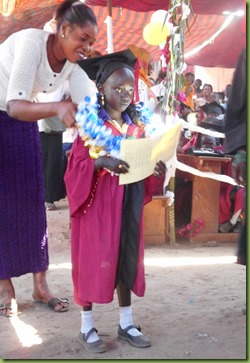
Come along with us back to our neighborhood tea stall. It is late Tuesday afternoon, when the heat is just starting to lessen but still 95 degrees in the shade. We pick our way over the ruts and trash in the dirt alleyway of the market to where there are some chairs set up in the shade along a wall. This spot is the afternoon location for Mary’s ‘mahel shayi’, or tea stall. In the midst of greeting Mary, I hear someone yell “Kristi!” and see a shape come flying towards me. Mary’s daughter Fonfon, about age 9, runs around the corner and wraps her arms around me in an exuberant hug. She is with her sister and cousin, and we exchange greetings and congratulate her on the recent award she won for being the top student in her class.

Then we go and greet each of the three men sitting in the chairs, sitting down ourselves at the end of the row. We exchange greetings with Mary, asking about her other children and family. We order our tea – Bob, hibiscus with ginger, and me, green tea. Mary teases, asking if I drink green tea because I am on a diet as she turns and goes to make our tea. Perhaps it is the Arabic culture and Sudan to the North who have passed to the South Sudanese the habit of drinking hot tea even on a hot day. People in Juba can drink tea all day long, and it is one of the most common small businesses for women.

We notice Bushara, another regular at the tea stall, standing a few paces away at his table, set up in the alley where he is repairing electronic devices like cameras and printers. Bushara is a basketball coach, and we have seen him a few times at the basketball stadium with his team as we pass by on our walks in the neighborhood. Bushara likes to talk to Bob about NBA basketball; he is a fan of the Chicago Bulls, but concedes that they aren’t very good. Somehow we start talking about his time in Khartoum many years ago. He tells us how while in the army, when they issued him an ID card, they marked his religion as ‘Muslim’ because of his name. When he told them he was a Christian, they mocked him and started making life difficult. One of the reasons many Southerners left Khartoum was because they were persecuted there for being Christians. But then Bushara also tells us about a girls basketball team in the North who prayed and worshipped together and had great faith. “They won,” he said, “because of their great faith.” As Bushara animatedly tells his story, we struggle a bit to follow his Khartoum sounding Arabic, able however to get at least the sense of the story. “People used to have faith here, Bushara continues “but then with the war and the economic crisis, it is no longer like that. People just want money.” Like so many others, he laments the current struggle in South Sudan.

As we talk with Bushara, Santino, a stately older gentelmen who is another regular, walks up with another man. They greet everyone and find chairs in the middle of our row along the wall. His friend asked our names and how long we have been in Juba. “About seven months”, Bob replies in Arabic. “No, seven years!” he adamantly replies. “No, seven months,” Bob says again. “Not possible.” the man insists. “You can not speak Arabic like that in seven months.” We laugh, and ask Santino to vouch for us that we indeed came to Juba just last year. Before leaving, we learn that the man is actually Santino’s younger brother, which means that he is of the same tribe as Santino. Bob has intentionally learned some greetings and phrases in some of the local tribal languages and greets him in Bari. “Oh, you speak Bari?” the man replies in Bari. This, of course, is beyond what we know in that language, and we are befuddled. But Bob, always eager to learn, has him repeat the phrase until he can write it down and repeat it.

Finally, after an hour of talking and drinking tea, we get up to leave. We are grateful for these familiar and friendly people who help us feel connected in the community and who help us as we practice and learn Arabic. We wish that we could show you a picture of this wonderful place of hospitality, but we do not take pictures in public in Juba because it often makes people angry. So, you wil lhave to imagine from our word picture, and give thanks to God with us for these inspiring and helpful people that we drink tea with in the shade. 

Saturday, January 6, 2018

Abiding in Christ, Resting in the Lord

While living in Rwanda several years back, Antoine RUTAYISIRE, then team leader of African Evangelistic Enterprise (AEE) Rwanda, and I would spend a week in prayer and fasting as we began the New Year.  We enjoyed being refreshed together by God’s presence, earnestly crying out to the Lord about life and ministry issues which lay deep in our hearts.  While in seminary at Fuller, each year I would take a few days of retreat at St. Andrew’s Abbey up in the High Desert of Southern California where I would reflect over the past year while seeking God’s presence and will for the year to come.  Those were incredibly meaningful times of prayer and silence and enjoying the beauty of God’s creation. 

The majestic and famed Nile River

The day after Christmas Kristi and I spent several days doing a prayer retreat on the shores of the Nile River here in Juba, South Sudan.  It was an enjoyable, restful, and relaxing time of reflection, enjoying nature, and praying over 2018.  We spent many hours just sitting alongside the giant river, watching the methodical current flow northward.  Sitting by the river and simply being still has a calming, healing effect.  I believe that God inspired our minds and our prayers during our time there. 

Gazing at the glorious sunrise on the horizon

In reflecting on 2017, Kristi and I realized that this last year has been one of “surrender” and “giving up control.”  Major decisions were made last year greatly affecting us over which we had no control.  We simply had to submit to these decisions as God’s will.  Moreover, we also came to a place of surrender – realizing that we had to hand over to the Lord significant  hopes and dreams, knowing that there was nothing in our strength or power we could do to make them happen.  To surrender and not have control are humbling realities which refine our character and build our faith.  During our time of reflection, we gave thanks for the many wonderful things that happened over this last year.  We could see God’s hand of blessing, grace and goodness in our lives regarding new and old friendships, memorable experiences, and a good transition to South Sudan. 

The Oasis Camp, a local guesthouse, was the picture
of warmth, hospitality and peace 

In looking forward to 2018, we each chose a word and a scripture verse as thematic for hopes in this upcoming year.  As Kristi took time to pray, the word that came to mind for her was “abide,” from Jesus’ words to his disciples in John chapter fifteen.  She considered concrete ways that she can abide in Christ, such as finding new and creative ways for prayer, being present to others, and cultivating our home as a place of sanctuary and freedom.  For me, the word that came to mind was “rest,” inspired by the words of the prophet Isaiah, “This is what the Sovereign Lord, the Holy One of Israel says, ‘In repentance and rest is your salvation, in quietness and trust is your strength…’” (Is 30: 15).  In being afflicted by the Epstein - Barr Virus (EBV) for almost eight months now, rest has been a constant theme; it is from the place of rest where I gain strength and freedom and even ‘salvation’ from the worries of a harried world.  This unwelcomed guest, EBV, has taught me to slow down, to see people and issues more clearly and more deeply.  Richard Rohr, the Franciscan monk and priest, says that mystics of ages past use the verb “rest” more than any other verb.  On that note, as we enter the gravitas of a New Year, I feel the need and the desire to “rest in the Lord” moment by moment, day by day, week by week, month by month. 

Perhaps difficult to see, but two Giant Kingfishers sit
a few balconies down, gracing our environs each morning

Some hopes and prayer for the New Year include:  physical healing for me, greater clarity for Kristi in her ministry role, wisdom for me in my teaching coupled with a love for my students, continued progress and comfort with Juba Arabic, finding a rhythm of life that works for us, having restorative times away (R&R, vacation), finding a church community to regularly worship and connect with, wisdom regarding opportunities to collaborate with other ministries, finding ways to be more organized, staying connected with family and friends back home.  We invite you to pray with us regarding these hopes for 2018. 

We also invite you to consider a word and scripture that would be an anchor for you in this New Year.  We invite you to join us in this journey of abiding in Christ and resting in the Lord.  Grace and peace to you, today and always! 


Saturday, December 23, 2017

Create in me a clean heart

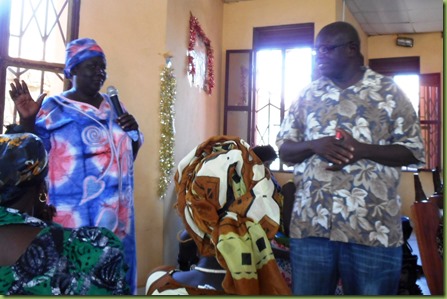
December is a month of difficult memories in South Sudan. The current conflict began four years ago this month, and people remember the anniversary of the killings and upheaval as they pray for another round of talks and negotiations currently happening in Addis Ababa. The women of the South Sudan Presbyterian Evangelican Church (SSPEC), are passionate about praying and acting to encourage peace, as they know that is a prerequisite for any lasting development in the country. To that end, they decided to hold a workshop this month on trauma healing and also on the contribution of women in the development of the church. Their theme came from Psalm 51, "Create in me a clean heart, and renew a right spirit within me." It was a meaningful and joyful time, as women from several congregations came together to learn, share, worship, and pray for unity in their country. It was encouraging to see this cross-section of women – some younger, some older, from several different tribes and language groups, some who are well educated and hold good jobs, and others who are not able to read or write – sharing together and bridging the obstacles that could divide them.

Women sing together at the beginning of the meeting
Achol Majok is the chairperson for women’s ministry in SSPEC, and she began the meeting by acknowledging the anniversary of the conflict, and the upheaval that many of the women have experienced. She passionately exhorted the women to pray and work for peace, investing themselves in the process. She emphasized the importance of the role of the church, saying it is like a sub-committee within the National Dialog process.

Achol exhorts women to pray and work for peace
A session that gave an overview of trauma healing was facilitated by John Orian. He invited participants’ thoughts about what conflict is, and trauma, and what signs you might see that someone has been traumatized. He gave an example of two people in conflict, and asked people to share the culture within their tribe of how those two people would achieve and demonstrate reconciliation. The women were eager to share experiences and thoughts, recognizing the traumatic experiences that most South Sudanese people have lived through. John emphasized the importance of the church being a space that is ‘safe’, where people feel at peace and can work towards reconciliation.

One woman shares her thoughts during the trauma healing session

Lunch of bread and stew
After a filling lunch, Rev. Philip Obang, the General Secretary of SSPEC, presented about the significant role and contribution that women have in the growth and development of the church. He began by highlighting women in the Bible who played a role in ministry, leadership, or through their business activities. He then identified the various ways that the church should develop – spiritually, through discipleship and also numbers, but also culturally and personally, as members are mentored and built up. There was a lively discussion afterwards – SSPEC has not ordained women pastors or elders, which means there is also little representation of women in their General Assembly.

Rev. Philip teaching about church development
Many of SSPEC’s congregations are located within refugee or IDP (internally displaced persons) camps, because that is where the peopel are. Some of the women had to leave the workshop early to return to the camp before the curfew. But it was encoruaging to see these women reconnecting with each other and feeling valued and empowered. As they prepare for Christmas, it felt fitting that they focus on peace and healing, to be able to experience the true and eternal peace that Christ came to give. We are grateful for their partners in the U.S. that supported this workshop financially, and for the vision of the church to continue to make the church a place of peace and of hope in the midst of this challenging environment.

Friday, December 8, 2017

The Little Things

Life can often feel difficult and depressing – at least that is a current struggle here for us in South Sudan. But in the midst of that, I was reflecting recently on several specific things we are grateful for here in Juba, that refresh our bodies and spirits. Here are a few of the ‘little things’ in life that give us joy:

1. People in our neighborhood we have gotten to know, who have welcomed us into their lives. Like Mary, the owner of the tea-shop that we frequent, who invited us to the end-of-year celebration at her daughter’s school. Or Helen Frederick, who called us to say that she had a new grandchild, and invited us to stop by and visit the baby.

One of the kindergarten graduates


2. Recent steps of improvement in Bob’s health. The journey with Epstein-Barr has been a long, twisted road and constant ups and downs. But just last week Bob felt up for preaching at church (with only 1 day’s notice!), and overall his energy is much improved from a few months ago, as long as he is not sick with a bad cold or sometthing else.

Bob talks to some kids after the church service last week

3. Dinner on the river. While we lament that insecurity prevents us from traveling freely outside of the city, we are grateful for some restaurants near us that provide a diversion, fun food, and sometimes a refreshing view of nature. This week we happened to be at this restaurant on the night of the full moon, and got to watch it rise over the river!

Dinner with friends at a restaurant on the Nile River –
such a refreshing change from the dust and heat of the city.

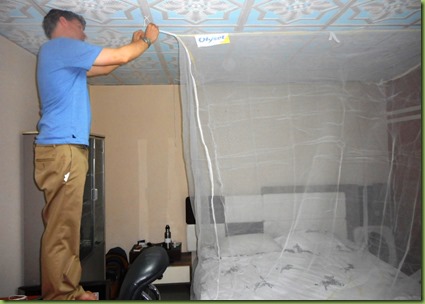
4. Our mosquito net. We put up a net a few months ago after too many nightly battles with mosquitos.While sleep is still a challenge for us, we are grateful that at least we are not getting bit by mosquitos, and we do not have malaria!
5. The variety of fruits and vegetables available here. We make fruit smoothies often, which we could not do in Congo because of lack of electricity. And we eat big colorful kale salads, a delcious meal in warm weather. It still feels like luxury to be able to get a red bell pepper or celery in the middle of Africa.
kale salad
One of our favorite kale salads


6. Consistent internet. Not fast enough to stream movies, but at least we can usually download podcasts or music or use Skype to connect with family and friends far away. We are grateful for this technology that gives us options for news, inspiration, and communication.

7. Church in English – This also still feels like a novelty after our years in Kananga. Once in awhile when we do not have a scheduled church visit on a Sunday, we enjoy worshipping and fellowship in English with new friends from many different countries.

8. Evening walks in the neighborhood: The sliver of time between when the sun is going down and when it gets dark is a great time to enjoy some fresh air without it being too hot outside. We are so grateful to be able to stroll through our neighborhood and sometimes have some good conversations as we get to know people.

9. A good story – This year we got on a roll of reading a book together – usually reading a little before bed. Whether a memoir, or a novel, or something inspiring, we appreciate having our perspectives expanded and imagining what is possible.

10. Simon, one of the guards of our building. Simon is a policeman assigned to our building. He is here night and day, and is one of the friendliest, happiest people we have met. He is very hard to understand (perhaps because he is missing several teeth), but he likes to joke around and help us practice Arabic. There are many people who we appreicate in South Sudan, but Simon certainly makes our lives a little brighter as we come and go each day.

Saturday, December 2, 2017

“College Day” at Nile Theological College

 A festive quality filled the air.  The large tents were erected by students and faculty for this special, annual occasion.  We were gathering to celebrate the 26th anniversary of the founding of Nile Theological College (NTC).  Our small contingent of mission co-workers showed up close to eleven in the morning amidst a flurry of activity.  In attendance were alumni, faculty, former faculty, esteemed guests and the student body.  A local choir led us in song, filling the tent with vibrant sounds and distinctive Arabic praises.  The theme verse for the day, emblazoned on the banner upfront, was from Paul’s letter to the Philippians.  Amidst all of the adversity the Apostle Paul faced, he boldly proclaims, “I can do all things through him who strengthens me” (4: 13). 

"College Day" at NTC, Rev. Santino, (Principal) speaks

Gathered together under the big tent


Perhaps this theme reflects well the journey of Nile Theological College, particularly over the last six years.  From their origin in Khartoum, a second campus was planted and developed in Malakal in the Upper Nile State in 2011 .  This initiative was a labor of love, establishing this institution in the newly created country of South Sudan for the purpose of training future leaders who will serve their congregations and communities.  Yet, the new school would be destroyed as fighting erupted in late 2013, lasting well into 2014, and continuing even to this day.  The new campus would relocate to Juba where scattered students and faculty would find each other once again.  The faculty asked the handful of few students, “What should we do?  Should we reopen?”  The students replied “Yes, it would be good to reopen.”  Thus, with only five students, the school reopened in early 2015.  In these two years, with two new intakes, the student body has quickly grown to more than seventy.  It feels as though God’s Spirit is at work.  Most of these students have been displaced from their home regions and ten of them currently live in Internally Displaced Person (IDP) camps in and around Juba.  Most of them face challenges communicating with family who are either in refugee camps in Ethiopia or in rebel controlled regions of South Sudan.

Bill, a doctor who teaches about HIV/Aids at NTC,
raises his hands in praise

During the anniversary celebration last Saturday, we heard from many different voices.  A representative of the Student Union spoke along with a distinguished alumnus who is now serving the Africa Inland Church (AIC).  A faculty member then preached a message from Philippians, making the point that the Arabic Bible uses the word ‘Abd’ for Jesus in the well-known Philippians two passage.  While many English translations use the word servant, ‘Abd’ in Arabic means “slave.”  He compared our service to that of Jesus, who emptied himself and took the form of a slave, impressing on us that the Spirit presses one to serve, even as a slave is compelled to serve his/her master.

Rev. Samuel Jok, who teaches Sudanese Church History at NTC,
preaches from Philippians 4: 11 - 13

The celebration continued with worship through song and remarks from the academic dean, the former principal, the current principal, the chairman of board and a representative from the government of South Sudan, the Honorable Rebecca Joshua Okwaci.  Rebecca and others gave tribute to her father, a leader in the community and church and one who greatly encouraged many.  Rebecca spoke at length, citing the depth of the riches and wisdom and knowledge of God – how unsearchable are his judgments! (Romans 11: 33).  She herself volunteered to meet some of the needs expressed by the student representative, and encouraged us all to do whatever we can to strengthen and help this institution.  She spoke passionately, fluent both in Arabic and English. 

 Rev. James Partap, Chairman of NTC, pictured with
Honorable Minister Rebecca Joshua Okwaci and
Honorable Minister Yien Oral Lam

Rev. Peter Gai Lual gives the closing words and benediction
he shared that though he felt pain in his body, he stayed for the
duration, sensing God's healing presence in the gathered assembly

Our time together came to close with a nice meal and time of laughter and fellowship.  It was wonderful to be part of this celebration, giving thanks to God for twenty six years of equipping and preparing leaders for the manifold works of God.  May God’s hand of grace and mercy continue to rest upon Nile Theological College.         

Students enjoy the meal under the tarp